
Sensor Manufacturing Risks in Infrared Projects





In Infrared Sensing projects, Sensor Manufacturing risks can undermine Physical Security, Industrial Security, and Urban Security long before deployment begins. For Smart City and Critical Infrastructure stakeholders, aligning Security Standards, Data Governance, and Digital Twin integration is essential to prevent quality failures, compliance gaps, and operational blind spots across complex procurement and implementation cycles.
Why sensor manufacturing risk starts long before system integration
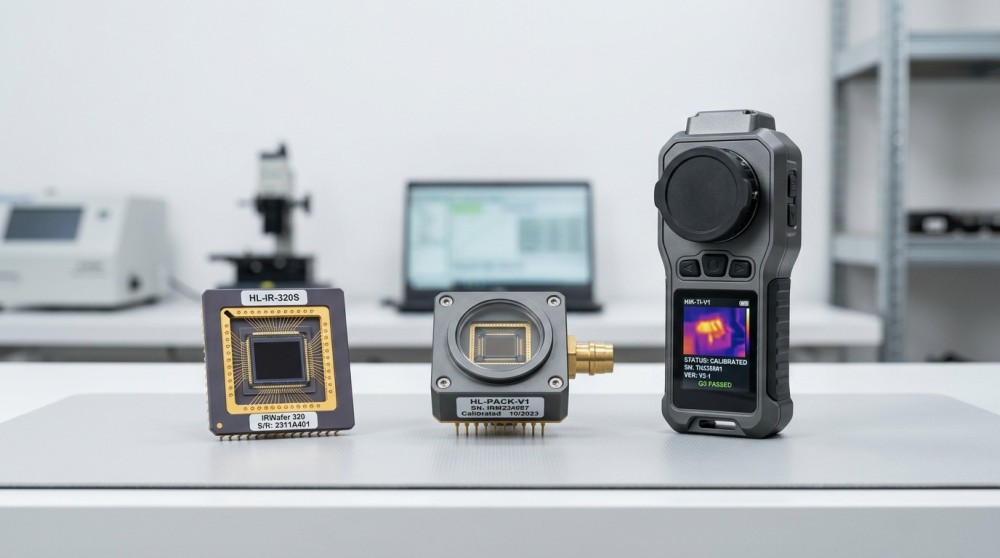
In infrared projects, many buyers focus on image quality, detection distance, or software analytics, yet the first major risk often originates in sensor manufacturing. Wafer consistency, packaging stability, calibration repeatability, and traceability discipline all influence downstream reliability. If those variables are poorly controlled during the first 2–4 production stages, the final thermal imaging system may still pass a basic bench test while carrying hidden failure modes into deployment.
For information researchers and enterprise decision-makers, this matters because sensor manufacturing risk is not just a technical defect issue. It becomes a procurement, compliance, and lifecycle cost issue. A sensor lot with unstable non-uniformity correction behavior can trigger field recalibration demands every 3–6 months, increase false alarm rates, and weaken trust in perimeter security, industrial inspection, or urban monitoring workflows.
Operators and project managers feel these risks differently. They see drift, inconsistent thermal contrast, startup latency, and integration friction with VMS, IBMS, or Digital Twin platforms. Quality and safety managers see another layer: incoming inspection exceptions, undocumented material changes, missing batch history, and a weak audit trail. In high-value environments such as substations, transport hubs, campuses, and energy sites, these gaps can affect both operational resilience and accountability.
G-SSI approaches this challenge from a benchmarking perspective that connects hardware risk with governance requirements. Rather than viewing the infrared sensor as an isolated component, the assessment links manufacturing discipline to data quality, compliance readiness, and secure deployment in critical infrastructure. That broader view is essential when procurement cycles span 8–16 weeks and involve engineering, security, IT, and compliance teams at the same time.
What usually goes wrong in the manufacturing chain
The most common breakdowns are not always dramatic. More often, they accumulate quietly across material sourcing, detector fabrication, packaging, calibration, and firmware tuning. A project can look compliant on paper and still suffer from unstable thermal response in the field. That is why B2B buyers should review risk at both component and system level.
- Uncontrolled material variation between lots, which can change sensitivity and baseline noise behavior.
- Packaging stress or sealing weakness that affects long-term stability under humidity, vibration, or thermal cycling.
- Calibration inconsistency, especially when production expands from small-batch to medium-batch output without equivalent process control.
- Insufficient traceability across firmware version, sensor lot, and acceptance records, making root-cause analysis slow and expensive.
When these issues are discovered only after site acceptance, remediation becomes costly. Teams may need replacement batches, software compensation, extra environmental testing, or revised maintenance plans. In security-sensitive projects, delays of even 2–3 weeks can affect commissioning, regulatory review, and contractor coordination.
Which manufacturing risks matter most in smart city and critical infrastructure projects?
Not every infrared application carries the same risk profile. A municipal traffic monitoring node, an industrial furnace inspection point, and a border or perimeter security installation impose different demands on sensor manufacturing quality. The key is to map manufacturing risk against mission conditions: duty cycle, ambient range, network architecture, and decision consequence when thermal data is wrong or delayed.
In smart city and critical infrastructure environments, four risk categories usually dominate. First is thermal consistency under variable weather or process conditions. Second is operational stability during long runtime, often 24/7. Third is integration reliability with video analytics, access control logic, or Digital Twin platforms. Fourth is governance readiness, including documentation, cybersecurity alignment, and procurement defensibility.
The table below helps procurement teams compare how sensor manufacturing risks manifest across common deployment scenarios. This is useful when the same project office manages both safety use cases and asset-monitoring use cases under one budget framework.
This comparison shows why a single generic qualification checklist is rarely enough. Procurement teams should use scenario-based evaluation, especially when the project includes 3 or more functional zones, mixed ambient conditions, or multiple subcontractors. G-SSI’s cross-pillar perspective is especially relevant here because thermal imaging risk often affects surveillance, building systems, and data governance at the same time.
How risk exposure changes by project scale
Small-batch pilots usually expose integration and calibration issues first. Medium-batch deployments often reveal repeatability gaps between production lots. Large-scale rollouts, especially across multi-site infrastructure, add governance and service complexity. A sensor that performs well in a 10-unit pilot may present a very different risk profile in a 500-unit regional deployment.
Three signals that risk is moving from technical to commercial
- Replacement planning begins to affect project schedule rather than only maintenance scheduling.
- Compliance, cybersecurity, or tender teams request additional documentation after factory acceptance.
- Site teams need manual operational workarounds because thermal data no longer supports automated workflows.
Once these signals appear, the project is no longer dealing with a narrow component problem. It is dealing with a governance, cost, and stakeholder alignment problem.
What should buyers verify before selecting an infrared sensor manufacturing partner?
A strong procurement process should move beyond resolution and price. Buyers need a structured review of process control, traceability, compliance readiness, and integration support. For most B2B projects, 5 core checkpoints provide a practical decision framework: sensor consistency, environmental robustness, documentation completeness, interoperability readiness, and lifecycle service capability.
This is where many organizations lose leverage. If the RFQ only asks for image output specifications, vendors can meet the letter of the request while leaving unresolved risks in batch stability, firmware governance, and after-sales diagnostics. Project managers should therefore align engineering specifications with acceptance and support clauses before issuing final procurement documents.
The following table can be used during supplier qualification or technical clarification. It is designed for cross-functional review involving procurement, quality, engineering, and security governance stakeholders.
Used correctly, this matrix helps teams separate low initial price from low lifecycle risk. It also helps enterprise buyers document why one supplier is safer for operational continuity, even when quoted lead times fall within a similar 6–12 week window.
A practical 4-step qualification workflow
- Define the mission profile: ambient range, runtime, response requirement, analytics dependency, and compliance constraints.
- Screen the manufacturing process: lot control, packaging method, calibration workflow, and engineering change discipline.
- Validate at system level: test with target optics, network environment, analytics engine, and acceptance conditions.
- Lock service commitments: replacement logic, support SLA, documentation updates, and issue escalation path.
For cross-border or regulated procurement, these 4 steps should be documented before final award. That reduces disagreement later between technical approval, commercial delivery, and site operations teams.
How do standards, compliance, and data governance affect sensor manufacturing decisions?
Infrared sensor manufacturing risk is not limited to device physics. In security and critical infrastructure projects, standards alignment and data governance increasingly shape supplier selection. If thermal data feeds a smart city command center, edge AI workflow, or Digital Twin environment, then manufacturing decisions also influence retention logic, incident validation, and audit readiness.
Procurement teams should treat standards in 3 layers. The first layer covers product safety and electrical discipline, often guided by ISO, IEC, or UL-related frameworks depending on deployment. The second layer covers interoperability, including ONVIF or other system interface expectations in surveillance ecosystems. The third layer covers governance, such as privacy handling, supplier eligibility, and documentation adequacy under region-specific procurement rules.
G-SSI’s advantage is the ability to connect these layers. A technically strong sensor may still be a weak project choice if it creates governance friction. That can happen when documentation is fragmented, firmware control is opaque, or the product integrates poorly into broader building intelligence and security architectures.
Compliance checkpoints that should appear in project review
Most enterprise and public-sector teams benefit from a checklist-based review before pilot approval and again before mass deployment. A 6-item compliance checkpoint is often more practical than relying on a single certificate or generic declaration.
- Clear product identification, revision records, and lot traceability tied to receiving and deployment documentation.
- Defined electrical, environmental, and operational limits suitable for the intended security or industrial environment.
- Documented interoperability assumptions for VMS, analytics platforms, or building management connections.
- Change management process covering hardware updates, firmware updates, and field notification intervals.
- Governance alignment for privacy-sensitive or regulated deployments, especially when thermal metadata is stored or shared.
- Service and incident-response process that matches the project’s operational criticality and maintenance schedule.
This approach is especially important when multiple pillars intersect, such as thermal detection linked with access control, AI vision, or IBMS dashboards. In those environments, a sensor manufacturing weakness can quickly become a data governance weakness.
Common compliance blind spots
One common blind spot is assuming that acceptable image output equals acceptable governance readiness. Another is relying on laboratory performance without validating field operating conditions across 10°C swings, dust load, or continuous runtime patterns. A third is approving a device before clarifying how firmware revisions will be communicated across the full asset lifecycle, which may extend 3–7 years.
These are not minor administrative details. They shape maintenance planning, accountability, and the defensibility of procurement decisions when incidents occur or audits begin.
Common misconceptions, field questions, and next-step decisions
Teams entering infrared projects often carry assumptions from conventional camera procurement. That creates avoidable sensor manufacturing risk. The biggest misconception is that a strong demo result guarantees stable batch production. In reality, demo units are often more controlled than rollout units, and the gap becomes visible only when scaling, integrating, or operating continuously.
Another misconception is that risk can always be corrected in software. Analytics tuning and image processing can mask some variability, but they cannot fully restore stable sensor behavior when the underlying manufacturing process is inconsistent. In security applications, this matters because reliability must hold across seasons, sites, and operating staff, not only in a controlled test room.
For buyers comparing suppliers, the better question is not simply “Which thermal sensor is best?” but “Which manufacturing and governance model fits our deployment risk?” That framing leads to better tender wording, stronger acceptance criteria, and fewer surprises during the first 30–90 days of live operation.
FAQ: what B2B buyers and project teams ask most often
How should we compare two infrared sensor suppliers with similar specifications?
Start with four areas beyond headline specifications: batch consistency, calibration repeatability, traceability depth, and integration evidence. If both suppliers quote similar detection performance, ask how they control lot variation, how often calibration is reviewed, what records can be tied to each unit, and whether interoperability has been verified in comparable systems. That comparison usually reveals meaningful lifecycle differences.
What is a reasonable lead-time expectation for secure procurement?
For standard B2B projects, technical clarification and sample validation may take 2–6 weeks before formal ordering. Production and delivery windows often fall into a 6–12 week range depending on batch size, customization, and documentation review. Projects with specific compliance gates, multi-site acceptance, or Digital Twin integration can require additional coordination time.
Which teams should participate in sensor manufacturing risk review?
At minimum, involve procurement, engineering, quality, and operations. In security-sensitive projects, include IT or cybersecurity and governance stakeholders as well. A 5-party review may seem slower at first, but it often prevents late-stage disputes over documentation, network integration, and acceptance responsibility.
When is a lower-cost alternative acceptable?
Lower-cost options can be viable in low-consequence environments, short duty cycles, or limited pilot projects where manual supervision remains strong. They are less suitable when the system runs 24/7, feeds automated decisions, or supports high-value asset protection. Cost decisions should therefore be linked to operating criticality, not unit price alone.
Why work with G-SSI on infrared sensor manufacturing risk assessment?
G-SSI supports buyers and project teams who need more than a component quote. Our value lies in connecting sensor manufacturing risk with security architecture, compliance review, integration logic, and commercial intelligence. That is especially useful when your project touches critical infrastructure, urban security, industrial monitoring, or cross-functional digital transformation.
You can consult G-SSI for parameter confirmation, supplier benchmarking, product selection, batch-risk screening, standards alignment, delivery-cycle evaluation, Digital Twin integration review, sample planning, and quotation communication support. If your team is preparing an RFQ, validating a pilot, or comparing multi-vendor infrared solutions, a structured technical-commercial review can reduce both procurement uncertainty and operational blind spots.
The most efficient next step is to share your intended application, environmental conditions, deployment scale, target interfaces, and any mandatory compliance requirements. From there, the discussion can focus on the right sensor manufacturing controls, documentation depth, sample strategy, and rollout safeguards for your project rather than on generic product claims.
Related News
Thermal Sensing
Curation by industry experts
Popular Tags
Related Industries
- Which chemicals market updates matter for refrigerant procurement budgets?Chemicals market updates reveal the refrigerant supply, regulatory, and pricing risks that shape smarter procurement budgets and resilient critical infrastructure.
- How GDPR shapes biometric access control deployments in EuropeBiometric access control Europe: learn how GDPR affects lawful basis, DPIAs, secure architecture, retention, vendor contracts, and inclusive deployment planning.
- When edge AI analytics can reduce cloud video processing costsEdge AI analytics can cut cloud video processing costs by filtering events locally, reducing bandwidth, storage, and inference demand. Explore a smarter hybrid surveillance strategy.
Weekly Insights
Stay ahead with our curated technology reports delivered every Monday.