





Commercial Perimeter Security Acceptance Testing: A Practical Handover Checklist
What should be included in a commercial security system acceptance test? For security leaders and procurement teams, the answer goes beyond confirming that cameras record and gates open.
A commercial perimeter security acceptance test should verify detection coverage, alarm accuracy, access control integration, response workflows, cybersecurity, and resilience under realistic site conditions.
It should also establish measurable pass/fail criteria and document any gaps before operational handover, so acceptance rests on evidence rather than demonstrations or supplier assurances.
This guide explains how to turn specifications into verifiable test evidence, helping stakeholders confirm contractual performance and avoid accepting protection that fails during actual incidents.
What must the system prove before you accept it?
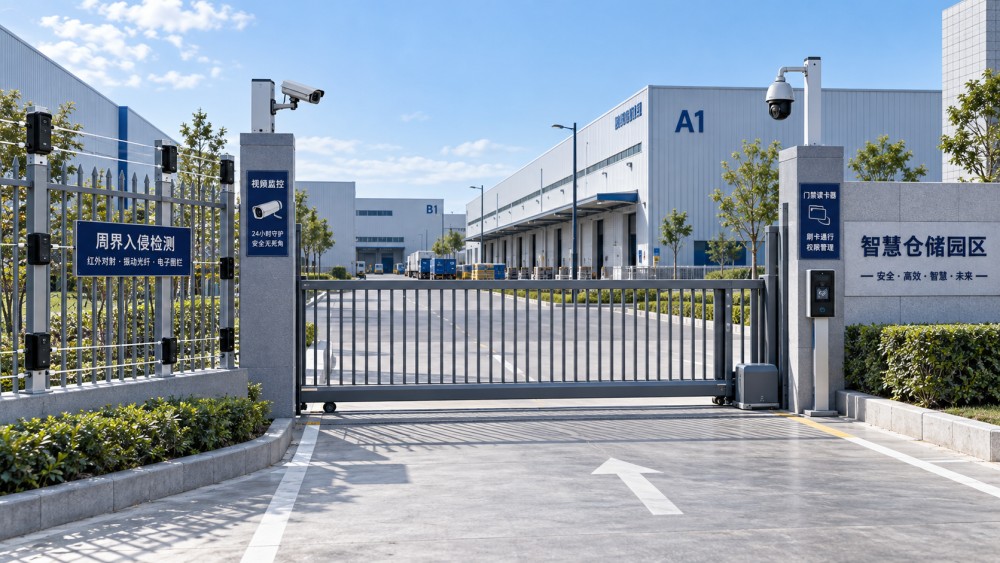
The essential question is whether the installed system can detect relevant threats, help operators assess them, and support an appropriate response within agreed operational limits.
A successful camera demonstration does not establish perimeter protection. Acceptance must examine the complete chain, from intrusion detection through alarm presentation to acknowledgment and escalation.
Start with a site risk assessment covering unauthorized entry, vehicle intrusion, tampering, and any specific threats identified for the facility, its assets, and operating hours.
Map each priority threat to a protected zone, detection method, assessment view, responsible operator, and response procedure. This exposes missing coverage before testing begins.
For warehouses, focus may include loading yards and overnight fence breaches. Critical infrastructure may require stronger redundancy, restricted maintenance access, and more demanding response verification.
Procurement teams should distinguish installation completion from operational acceptance. Payment milestones and handover decisions should follow the contract’s evidence requirements and treatment of unresolved defects.
Set measurable pass/fail criteria before the demonstration
Agree the acceptance protocol before testing starts. Otherwise, stakeholders may dispute whether a missed detection, delayed alarm, or unavailable recording represents acceptable performance or failure.
Every test case should identify the requirement, location, operating conditions, test action, expected result, measurement method, witness, and evidence needed to establish a defensible outcome.
Use contractual thresholds where available. If specifications are vague, resolve the ambiguity through an agreed clarification rather than allowing the installer to define success afterward.
Separate mandatory requirements from desirable capabilities. A failed protective function should not disappear inside an overall score boosted by successful tests of lower-risk features.
The following acceptance matrix illustrates what to measure. Numeric limits must reflect the site risk assessment, contracted performance, and operating model, rather than universal assumptions.
Can the perimeter detect realistic intrusion attempts?
Test the installed perimeter by zone, including corners, changes in elevation, gate interfaces, drainage crossings, and transitions between different sensor technologies or fence types.
Include representative intrusion methods identified in the threat assessment. Depending on the system, these may involve walking, crawling, climbing, fence disturbance, or approaching vehicle entrances.
Use authorized personnel and controlled simulations, with agreed safety arrangements. Destructive testing should occur only where explicitly included in the approved scope and method.
Repeat relevant scenarios at different locations and approach directions. One successful attempt proves that a function can work; repeated trials provide stronger evidence of consistency.
Record both successful detections and misses. Calculate observed detection performance using the documented trial count, while recognizing that small samples provide limited confidence about reliability.
Check the reported zone against the actual intrusion location. An alarm that identifies the wrong fence segment can delay assessment and direct responders incorrectly.
Where coverage overlaps, verify that integration preserves useful information. Duplicate alarms should not overwhelm operators or conceal separate events occurring simultaneously in adjacent protected zones.
Will cameras provide usable evidence when an alarm occurs?
Assess cameras against the intended task: detecting activity, recognizing a person, identifying an individual, or reading a vehicle plate each requires different image performance.
Test the actual operator view and exported recording, not just the installer’s live preview. Compression, display layout, recording settings, and export tools can affect usefulness.
Verify visibility under representative daylight and nighttime conditions, including headlights, shadows, glare, and backlighting. Check whether illumination adequately supports the required task throughout each zone.
Thermal cameras can support detection in darkness, but they do not automatically provide identification. Validate their assessment role alongside visible-light cameras where the design requires both.
For automated camera movement, confirm that an alarm selects the correct preset quickly. Also test whether competing alarms leave another critical area without assessment coverage.
Check recording triggers, pre-event footage, post-event footage, timestamps, and retrieval permissions. Retention should meet the agreed policy, with storage calculations validated against actual recording settings.
How many unwanted alarms can your team realistically handle?
A perimeter that detects intrusions but generates constant unwanted alarms can weaken protection. Operator workload and alarm credibility therefore belong in the acceptance criteria.
Run an observation period representative of site activity and relevant weather. A brief demonstration during quiet conditions cannot establish performance during normal commercial operations.
Log unwanted alarms by zone, time, cause, and operator effort. Distinguish nuisance triggers from equipment faults, authorized activity, and alarms whose cause remains uncertain.
Report rates using an agreed denominator, such as alarms per zone per day. Include observation duration and conditions so stakeholders can interpret the findings.
Challenge likely sources such as vegetation, animals, rainfall, vibration, and moving vehicles where feasible. Document conditions that remain untested and require later seasonal verification.
After tuning sensitivity or analytics, repeat affected intrusion tests. Lower nuisance rates are valuable only if the changes preserve the required detection capability across relevant scenarios.
Do gates, access control, and operator workflows work together?
Verify authorized entry, denied entry, expired credentials, scheduled access restrictions, and forced-open or held-open events wherever those functions form part of the contracted perimeter design.
Check whether relevant access events appear with the correct video, location, and priority. Operators should receive enough context to distinguish legitimate movement from unauthorized entry.
Test tailgating detection only where specified and technically supported. A valid credential transaction alone does not demonstrate that the system can detect an additional person.
Run an end-to-end scenario with the operational team: trigger an event, assess the image, acknowledge the alarm, escalate it, and record the response outcome.
Measure milestones separately so delays can be traced to detection, transmission, operator assessment, or dispatch. A single total response time can hide a weak component.
Include concurrent alarms and shift handover. These scenarios reveal whether queues, ownership rules, and escalation procedures remain clear when workload increases or responsibility changes.
Verify emergency access, release behavior, and gate safety against approved designs and applicable requirements. Coordinate tests with responsible specialists whenever life-safety functions are involved.
What happens when power, networks, or devices fail?
Controlled failure testing should cover relevant power supplies, network links, servers, controllers, and field devices. Agree isolation methods, restoration steps, and operational safeguards before starting.
Confirm that failures produce actionable notifications identifying the affected component or zone. Silent loss of protection is particularly serious when operators assume coverage remains available.
Measure backup power performance under the agreed load. Battery labels and design calculations alone do not prove