
Channel Tunnel Trials In-Car Camera-Supervised EES Checks





A two-year trial at the Channel Tunnel will allow travellers to complete biometric registration for the EU’s Entry/Exit System (EES) without leaving their vehicles. The trial will use camera-supervised biometric technology with the aim of simplifying border checks and improving the flow of traffic.
The change puts the vehicle at the centre of the registration process. For travellers, the proposed benefit is a more convenient check that does not require them to get out. For transport operators and equipment suppliers, the practical question is whether the technology can make that process work efficiently as part of a border crossing.
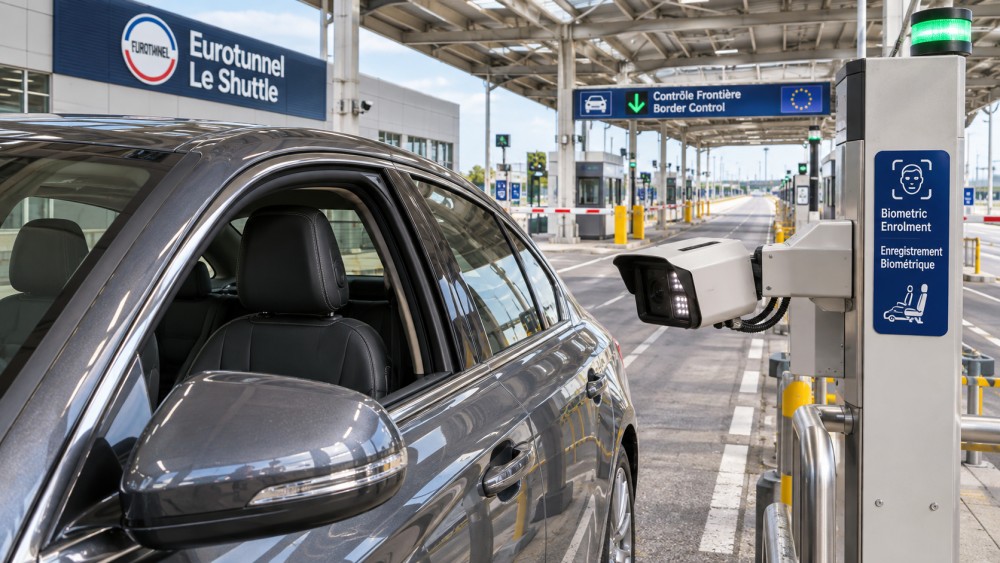
What in-car registration could change
Allowing travellers to remain in their vehicles could remove a step from the journey through the checkpoint. That does not, on its own, establish how much time the process will save. Its effect on traffic flow will depend on how quickly travellers can complete registration and how smoothly the check fits into the rest of the crossing process.
The distinction matters because convenience for an individual traveller and efficiency across a crossing are related but separate outcomes. An in-car process could be easier for passengers while still requiring careful coordination to keep vehicles moving. The trial provides an opportunity to assess the approach in that operational setting.
The two-year duration also makes this a trial of a proposed way of working, rather than evidence that the same approach will necessarily be adopted more widely. Results from its operation will be more informative than the intended efficiency gains alone.
Implications for equipment and crossing operations
For European suppliers of border biometric equipment, the trial draws attention to a specific operating requirement: supporting registration while the traveller remains inside a vehicle. Equipment performance would need to be considered alongside the practical needs of the crossing, including how camera-supervised checks fit into the movement of vehicles.
That creates a different commercial question from simply supplying a biometric device. A potential customer may also need to understand how the equipment would work within the overall process. The trial could therefore inform future discussions about operational requirements, although it does not establish that suppliers will receive new orders or that demand will increase.
For cross-border transport operators, the immediate interest is the effect on the traveller journey and the management of traffic through checks. If registration can be completed reliably from inside vehicles, operators may have an opportunity to reduce disruption associated with passengers leaving and returning to them. The scale of any benefit will depend on the full process and its performance during the trial.
The most useful developments to follow are the trial’s operational results: how the in-car registration process performs, whether it improves the flow of travellers and vehicles, and what those results mean for its continued use. Until such outcomes emerge, the clearest industry signal is an effort to adapt EES biometric registration to the practical demands of vehicle-based cross-border travel.
Related News
Thermal Sensing
Curation by industry experts
Popular Tags
Related Industries
- Dutch Regulator Finds Privacy and Security Failures in AI Smart GlassesAI smart glasses face privacy and security scrutiny after Dutch regulator AP tested six models. Explore the risks and practical checks for buyers and sellers.
- When is cross-border e-commerce viable for small manufacturers?Is cross-border e-commerce suitable for small manufacturers? Discover how to assess overseas demand, delivery costs, compliance, and support before expanding.
- Poland Approves EUDI Wallet Bill to Advance Cross-Border Identity RecognitionPoland’s EUDI Wallet bill could shape cross-border identity verification. Explore what it may mean for digital credentials, biometrics and buyers.
Weekly Insights
Stay ahead with our curated technology reports delivered every Monday.